What Businesses Can Learn From Brands That Truly Understand Women
Women influence or directly make the majority of household purchasing decisions across countless industries, yet many marketing campaigns still rely on outdated assumptions about what female consumers actually want.
Every August, timelines fill with pink logos, inspirational quotes and limited-edition Women’s Month campaigns, much like our own 🙂 While many are well intentioned, they often disappear as quickly as they arrived.
The brands that earn genuine loyalty from women take a very different approach.
They do not simply market to women. They understand women.
That distinction changes everything.
Whether you run a small business, an online store, a professional service or a national brand, understanding how women experience products, services and customer interactions can transform your marketing strategy. It leads to stronger relationships, more authentic communication and customers who keep coming back long after Women’s Month ends.
What Does Marketing to Women Actually Mean?
Marketing to women means designing your products, messaging, customer experience and brand around a genuine understanding of women’s needs, priorities, challenges and aspirations.
It is not about changing your brand colours to pink on Instagram.
It is not about using floral graphics on LinkedIn.
It is not about assuming every woman wants the same thing.
Women represent one of the most diverse customer groups in the world. They are business owners, executives, mothers, students, retirees, professionals, adventurers, caregivers and creators. Their purchasing decisions are influenced by practical considerations, emotional trust, convenience, value, safety and how well a brand understands their lives.
The strongest female consumer marketing strategies recognise this complexity instead of reducing women to stereotypes.
Why Generic Women’s Month Campaigns Often Miss the Mark
Consumers have become exceptionally good at spotting performative marketing.
A company that celebrates women for one month while delivering frustrating customer experiences throughout the rest of the year creates a disconnect that customers quickly notice.
Many campaigns fail because they focus on symbolism instead of substance.
Examples include:
- Changing a logo without improving customer experience.
- Running inspirational advertisements while offering products that ignore women’s real needs.
- Featuring diverse women in marketing while lacking diversity within leadership.
- Launching Women’s Month discounts without investing in long-term customer relationships.
None of these efforts are necessarily harmful, but they rarely build lasting trust on their own.
Women are increasingly looking for brands whose actions consistently match their messaging.
The Best Brands Start With Empathy
One of the biggest lessons businesses can learn is that empathy is a competitive advantage.
Brands that genuinely understand women spend time learning how their customers live rather than assuming they already know.
They ask questions like:
- What frustrates our customers?
- What makes their day easier?
- Where do they lose time?
- What creates unnecessary stress?
- What would genuinely delight them?
These questions influence everything from website navigation and customer service to product packaging and advertising.
Empathy is not a marketing tactic.
It is a business strategy.

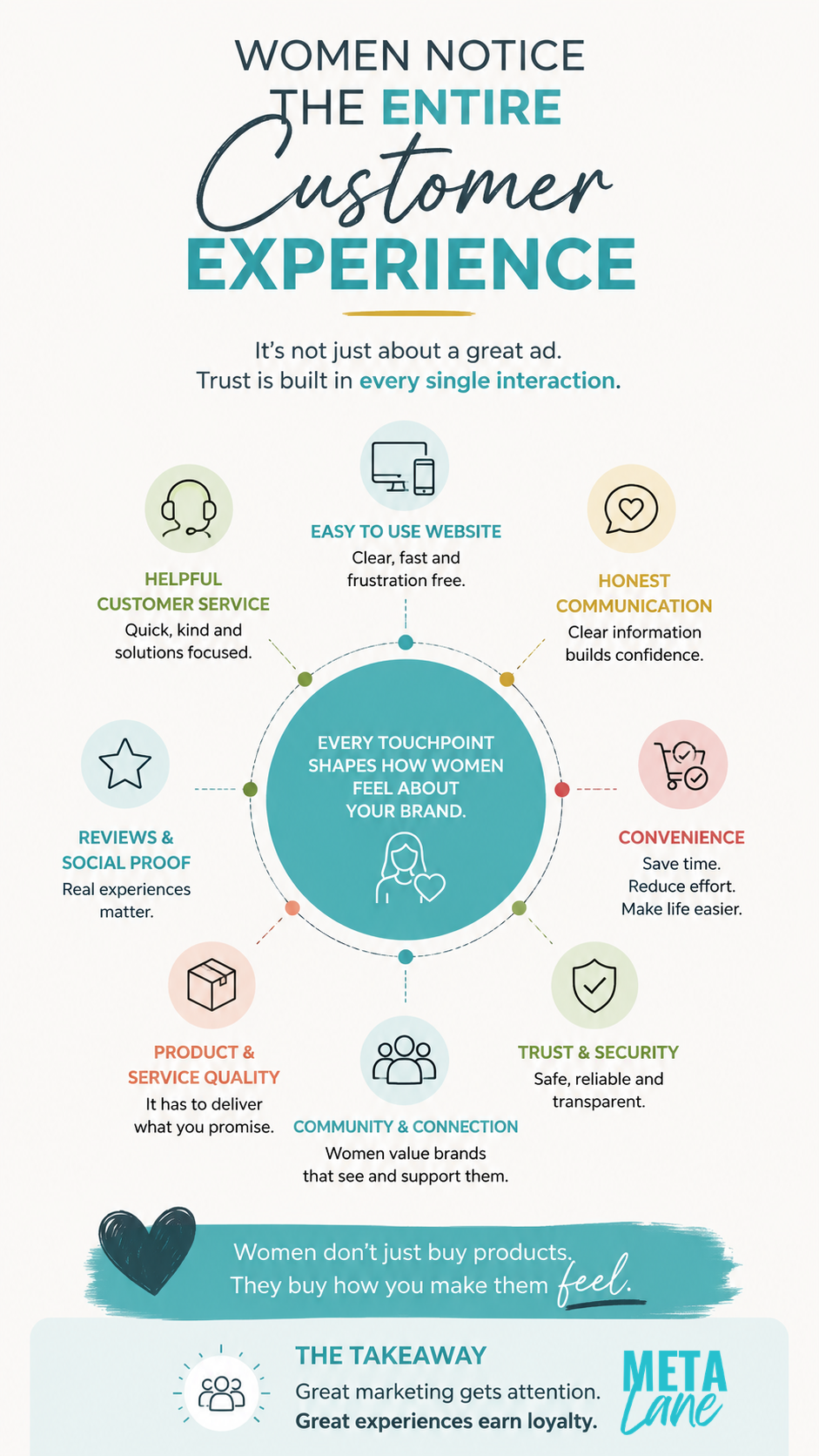
Women Notice the Entire Customer Experience
Many businesses invest heavily in advertising while overlooking the experience that follows.
For many female consumers, trust is built through dozens of small interactions rather than a single advertisement.
That includes:
Easy-to-use websites
A confusing website creates unnecessary friction. Clear navigation, transparent pricing and straightforward purchasing processes help customers feel confident.
Helpful customer service
Fast, respectful and knowledgeable support often has a greater impact than another advertising campaign.
Honest communication
Women value brands that communicate clearly without exaggerated promises or manipulative sales tactics.
Consistency
Every interaction should reinforce the same values and personality, whether someone visits your website, reads an email or speaks to your team.
The marketing campaign may attract attention, but the experience determines whether customers return.
Representation Matters, But Authenticity Matters More
Representation is important because customers want to see people they recognise in advertising.
However, representation without authenticity often feels forced.
Instead of simply featuring women in campaigns, ask whether your products, services and customer experience genuinely support the people appearing in your marketing.
Authenticity comes from understanding.
Customers notice when stories feel real because they reflect genuine experiences rather than marketing trends.
Great Marketing Solves Problems Instead of Chasing Trends
The most memorable campaigns rarely begin with a creative concept.
They begin with a customer problem.
Brands that resonate with women often solve practical challenges that make everyday life easier.
Sometimes that means improving convenience.
Sometimes it means saving time.
Sometimes it means removing unnecessary complexity.
Sometimes it simply means making customers feel understood.
When businesses focus on solving meaningful problems, marketing becomes far more effective because customers naturally recognise the value being offered.
Women Buy With Both Logic and Emotion
Purchasing decisions are rarely based on price alone.
Women often evaluate purchases through multiple lenses, including:
- Value for money.
- Trust in the brand.
- Recommendations from others.
- Previous customer experiences.
- Convenience.
- Long-term usefulness.
- Customer support after the purchase.
This does not mean every woman shops the same way.
Rather, it highlights why female consumer marketing should address both practical information and emotional confidence throughout the buying journey.
Businesses that educate, reassure and demonstrate value consistently outperform those that rely solely on promotional messaging.
Build Relationships Instead of Campaigns
Some of the world’s strongest brands have loyal communities because they invest in relationships rather than isolated campaigns.
That relationship might include:
- Helpful educational content.
- Honest newsletters.
- Valuable social media content.
- Responsive customer support.
- Useful resources before customers are ready to buy.
- Ongoing communication after the sale.
Marketing becomes significantly more effective when customers feel that a business understands them beyond the point of purchase.
What Small Businesses Can Do Today
You do not need the budget of a global brand to improve how you market to women.
Start by looking at your business through your customers’ eyes.
Ask yourself:
- Does our messaging reflect real customer experiences?
- Are we solving meaningful problems?
- Is our website easy to use?
- Does our customer service build trust?
- Do we communicate consistently across every platform?
- Are we listening to customer feedback throughout the year?
Small improvements across these areas often create a bigger impact than another promotional campaign.
Marketing That Understands Women Benefits Everyone
Perhaps the most important lesson is that designing better experiences for women usually creates better experiences for everyone.
Clear communication benefits every customer.
Helpful service benefits every customer.
Honest marketing benefits every customer.
Simple buying journeys benefit every customer.
When businesses invest in understanding people’s real lives instead of relying on assumptions, they build brands that are more trusted, more memorable and more resilient.
Women’s Month offers a valuable opportunity to celebrate women’s achievements, but the businesses that truly stand out continue listening, learning and improving throughout the entire year.
That is how lasting customer relationships are built.
Frequently Asked Questions About Marketing to Women
What is marketing to women?
Marketing to women is the practice of creating products, services, messaging and customer experiences that reflect the genuine needs, behaviours and preferences of female consumers. It focuses on understanding customers rather than relying on stereotypes.
Why do some Women’s Month campaigns receive criticism?
Many campaigns are criticised because they focus on symbolic gestures rather than meaningful action. Consumers increasingly expect businesses to demonstrate genuine commitment through their products, customer experience and company values all year round.
What is female consumer marketing?
Female consumer marketing is the strategy of understanding how women research, evaluate and purchase products or services. It combines customer insights, behavioural research and thoughtful brand experiences to build stronger relationships with female audiences.
Do women make most household purchasing decisions?
Research consistently shows that women influence or directly make a significant proportion of household purchasing decisions across many industries. The exact percentage varies by market and product category, so businesses should rely on current industry research when developing their strategies.
How can small businesses market to women more effectively?
Small businesses can improve by listening to customer feedback, simplifying the buying experience, communicating honestly, solving real customer problems and delivering consistently positive experiences instead of relying on seasonal campaigns.
Conclusion
The brands that earn the strongest loyalty from women are rarely the loudest during Women’s Month.
They are the ones that listen carefully, communicate honestly and continually improve the experience they deliver every day of the year.
Marketing to women is not about changing colours, slogans or campaigns for a few weeks. It is about understanding the people behind every purchase and building a business that genuinely makes their lives easier.
If your marketing starts with empathy instead of assumptions, you’ll create stronger customer relationships that last well beyond a single campaign.
At Meta Lane, we help businesses build marketing strategies that connect with real people through thoughtful branding, customer-focused content and long-term growth strategies. If you’re ready to create marketing that resonates beyond seasonal campaigns, we’d love to help.